The 2026 Blacksburg Big Plant was a blast–over 2000 trees planted across 2 days thanks to many dedicated volunteers and field leaders!
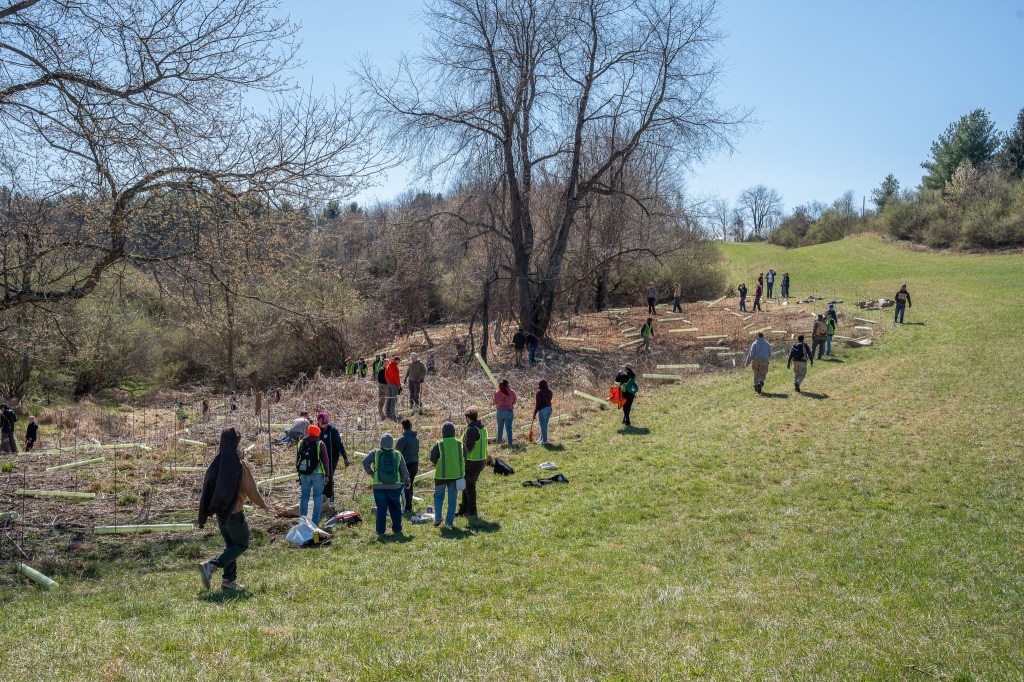
Over Saturday and Sunday, March 28th and 29th, 2026, 331 volunteers planted over 2000 bare-root seedlings across 53 different species and two restoration sites in Blacksburg. This impressive volunteer effort makes a lasting impact on the landscape and helps to ensure a healthier future for our forests.
2026 marks the 8th annual Big Plant in Blacksburg, Virginia. Established in 2019, the event has become an annual celebration of restoration and manual labor that draws in community members near and far.
While the Big Plant has historically taken place in Blacksburg, it has a ripple effect of positive change throughout the region. The in-kind volunteer hours from this event are critical to grant-matching requirements which allow us to do even more riparian and ecological restoration throughout the year—especially in communities who otherwise may not have the means for such projects. Essentially, the hard work that happens in Blacksburg for one weekend each year helps to secure restoration projects across the entire region of Southwest Virginia. Locations for riparian restoration projects that benefit from Big Plant in-kind hours include: Hiwassee, Narrows, Draper, Pulaski, Damascus, Hillsville, Norton, Roanoke, and Clifton Forge, VA.
We look forward to the years to come; in a few years, trees will begin to surpass the heights of their shelters, and some may quickly begin to produce fruit that can be enjoyed by both wildlife and foragers around Heritage Park and Historic Smithfield. As rain falls in the coming seasons, the trees we planted will absorb and filter it before it becomes part of the vapor in the air we breathe or a drop in waters downstream.
Saturday, March 28th at Heritage Community Park
Following a season of invasive species management (ISM) trials in ongoing collaboration with the Town of Blacksburg, the 2026 Big Plant location at Heritage Park was mulched to remove 5 invasive, dominant understory species (autumn olive, privet, japanese honeysuckle, multiflora rose, and asiatic bittersweet). This opened up a perfect spring planting zone with a few pre-established overstory native trees beside a small wetland.
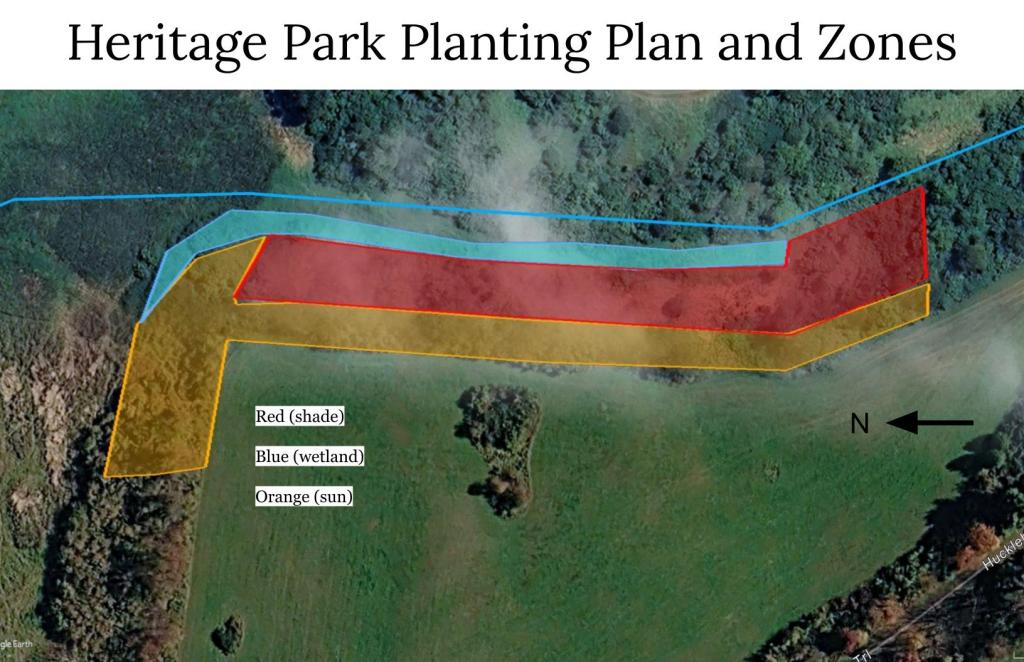
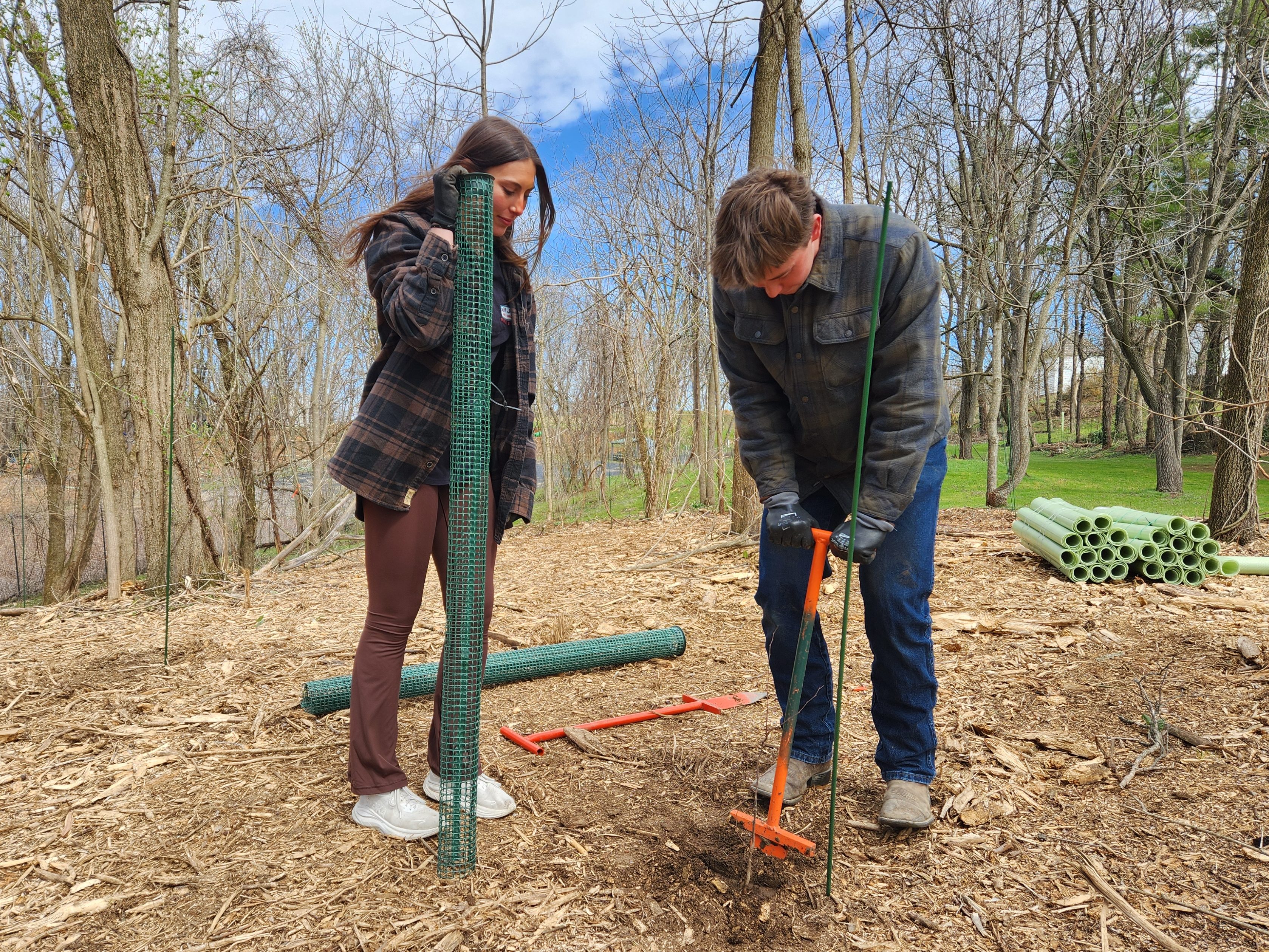
During the Big Plant, 140 volunteers planted 45 different species of native trees and shrubs from the list below. Some shade-tolerant species were planted in the shadows of standing native trees, and moisture-tolerant species, like willow, were planted adjacent to the wetland.
| Common name | Species name | |
| American Burning Bush | Euonymus atropurpureus | |
| American Basswood | Tilia americana | |
| American Beautyberry | Callicarpa americana | |
| River Birch | Betula nigra | |
| Boxelder | Acer negundo | |
| Yellow Buckeye | Aesculus flava | |
| Buttonbush | Cephalanthus occidentalis | |
| Black Cherry | Prunus serotina | |
| Black Chokeberry | Aronia melanocarpa | |
| Red Chokeberry | Aronia arbutifolia | |
| Southern Crabapple | Malus angustifolia | |
| Gray Dogwood | Cornus racemosa | |
| White Dogwood | Cornus florida | |
| American Elderberry | Sambucus canadensis | |
| Blackgum | Nyssa sylvatica | |
| Hackberry | Celtis occidentalis | |
| Washington Hawthorn | Crataegus phaenopyrum | |
| American Hazelnut | Corylus americana | |
| Bitternut Hickory | Carya cordiformis | |
| American Holly | Ilex opaca | |
| Hophornbeam | Ostrya virginia | |
| Indigobush | Amorpha fruticosa | |
| Black Locust | Robinia pseudoacacia | |
| Red Maple | Acer rubrum | |
| Silver Maple | Acer saccharinum | |
| Red Mulberry | Morus rubra | |
| Eastern Ninebark | Physocarpus opulifolius | |
| Northern Red Oak | Quercus rubra | |
| Swamp White Oak | Quercus bicolor | |
| White Oak | Quercus alba | |
| Paw Paw | Asimina triloba | |
| American Persimmon | Diospyros virginiana | |
| Eastern White Pine | Pinus strobus | |
| Redbud | Cercis canadensis | |
| Swamp Rose | Rosa palustris | |
| Downy Serviceberry | Amelanchier arborea | |
| Shadblow Serviceberry | Amelanchier canadensis | |
| Sourwood | Oxydendrum arboreum | |
| Spicebush | Lindera benzoin | |
| Smooth Sumac | Rhus glabra | |
| American Sycamore | Platanus occidentalis | |
| Arrowwood Viburnum | Viburnum dentatum | |
| Black Willow | Salix nigra | |
| Silky Willow | Salix sericea | |
| Witchhazel | Hamamelis virginiana | |
This begins the replacement of an invasive monoculture understory to a rich, biodiverse forest that will provide a higher-functioning riparian buffer and greater benefit to wildlife and humans alike.
As the trees grow, there is maintenance to be done; invasive species will inch their way back in, and will require ongoing management. In the future, you may see more mulching, mowing, or invasive species management. In many years, the trees will no longer need their shelters, and planting materials, like tree shelters and stakes, will be removed from the landscape. Human stewardship is necessary to restore heavily degraded environments to functioning native ecosystems, and the Big Plant is just one example of how we can make a positive change.
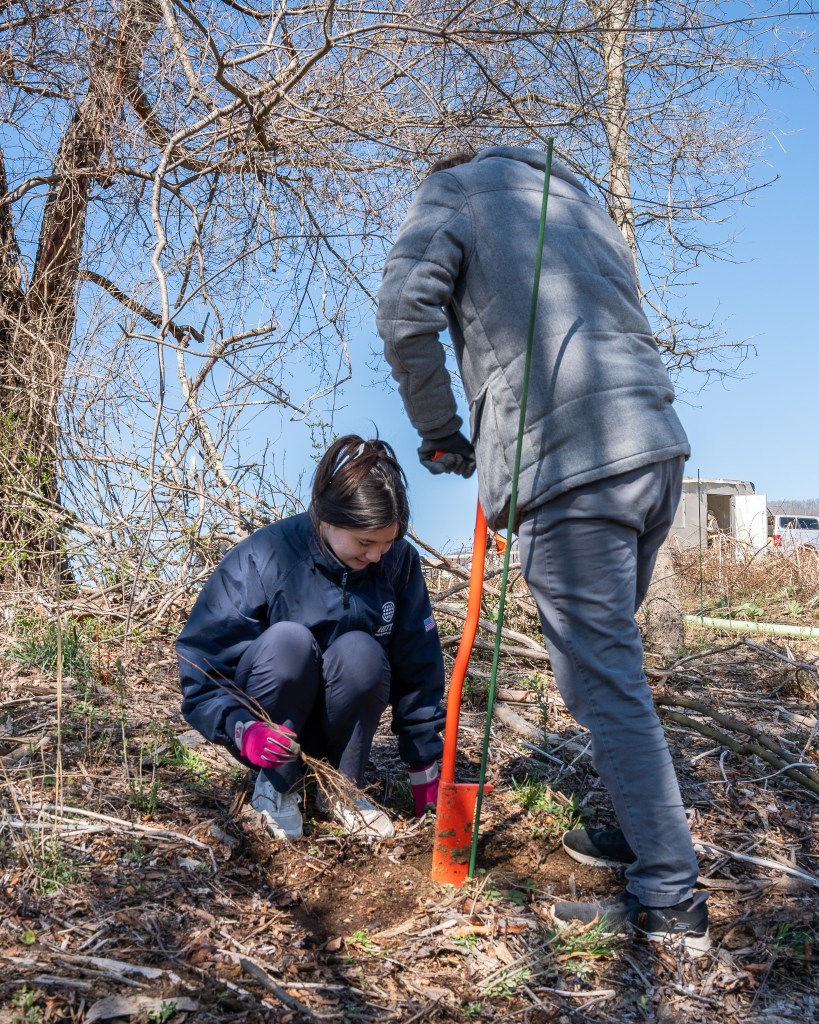
This is just the beginning for Heritage Park; in the next year, Ecological Restoration Collaborative and Watershed Restore LLC will be working with the Town of Blacksburg to produce an upscaled version of this project (treating/removing invasive species following by replanting natives) across 17 acres. Read more about the restoration project here.
Sunday, March 29: Historic Smithfield
For many years, the understory at Smithfield has been dominated by two invasive plants: Amur Honeysuckle and Privet. These species were not present in the peak of Smithfield’s operation, so choosing to restore the forest to a diverse, native selection was not only a decision of ecological value, but one of historic value also. After treatments, the invasive understory was mulched in early March, leaving only a few species of native trees in the canopy, including black walnut, black cherry, boxelder, hackberry, a lone American elm, and one Osage orange.
Because Smithfield has a solid base of volunteers and will be preserved for historic value for the foreseeable future, it is an excellent location for a restoration project; we have stewards who we can rely on and a future free of urban development that we can depend on.
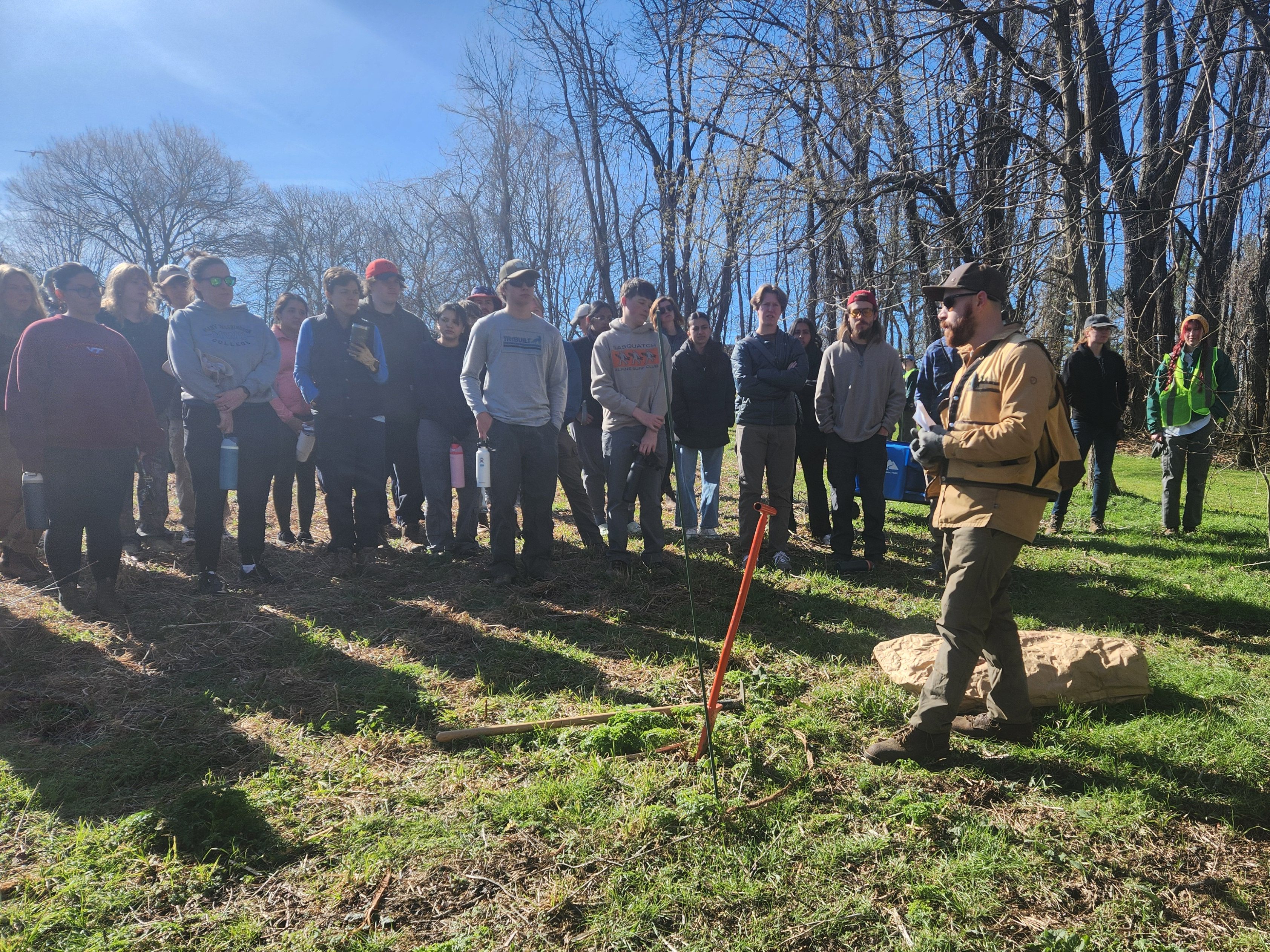
One particularly special part of the 2026 Big Plant at Smithfield was the addition of “legacy” white oak (Quercus alba) seedlings that were grown acorns from a 250-year-old tree in Virginia Tech’s Stadium Woods. Virginia Department of Forestry (VDOF) collected, grew, and donated these seedlings, which hold unique value because of their historic genetics, and because of how close by their mother tree is. These trees will get to grow less than a mile from their mother tree.
White Oaks are declining across Virginia’s landscape for a number of reasons, including fire exclusion, climate change, invasive species, habitat loss. Planting these seedlings that were borne of a tree as old as the United States is a symbol of hope not just for our landscape, but future generations who will depend on it.
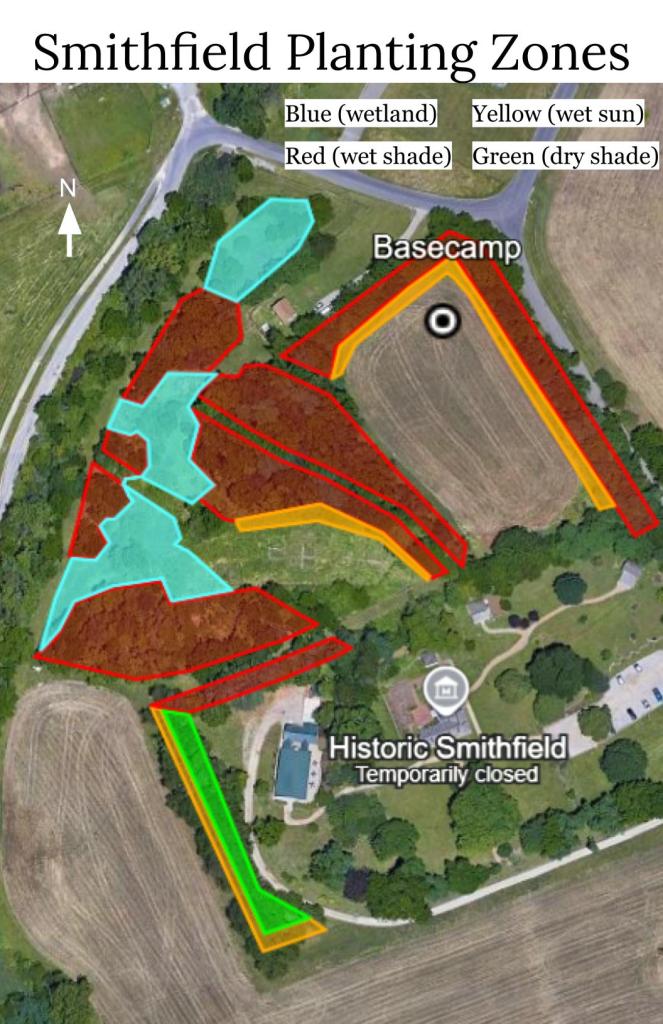
At Smithfield, 191 volunteers planted 1288 trees across 23 species; many of these species are shade-tolerant so they can survive in an already well-established canopy.
| American Burning Bush | Euonymus atropurpureus | |
| Buttonbush | Cephalanthus occidentalis | |
| Coralberry | Symphoricarpos orbiculatus | |
| Gray Dogwood | Cornus racemosa | |
| Silky Dogwood | Cornus amomum | |
| White Dogwood | Cornus florida | |
| Gum, Black | Nyssa sylvatica | |
| Hackberry | Celtis occidentalis | |
| American Holly | Ilex opaca | |
| American Hornbeam | Carpinus caroliniana | |
| Wild Hydrangea | Hydrangea arborescens | |
| Maple, Red | Acer rubrum | |
| LEGACY White Oaks | Quercus alba | |
| Pawpaw | Asimina triloba | |
| American Persimmon | Diospyros virginiana | |
| Downy Serviceberry | Amelanchier arborea | |
| Spicebush | Lindera benzoin | |
| Carolina Allspice Sweetshrub | Calycanthus floridus | |
| Blackhaw Viburnum | Viburnum prunifolium | |
| Mapleleaf Viburnum | Viburnum acerifolium | |
| Silky Willow | Salix sericea | |
| Winterberry | Ilex verticillata | |
| Witchhazel | Hamamelis virginiana | |
The planting zones accounted for differences in amount of shade, sun, and soil moisture.
Thank you again to the partners who helped to make this event possible:
- AmeriCorps National Civilian Community Corps (NCCC)
- VT Ecological Restoration Field Practicum
- The New River Conservancy
- Town of Blacksburg
- Blacksburg Parks and Recreation
- Smithfield Preston Foundation
- Environmental Coalition at Virginia Tech
- VA Dept. of Environmental Quality (DEQ)
- Virginia Department of Forestry (VDOF)
- Virginia Tech Office of Sustainability
- Stream Lab at Virginia Tech
- Virginia Tech Biological Systems Engineering
- VT Urban Horticulture Center
- Watershed Restore LLC
 Ecological Restoration Collaborative
Leave a comment