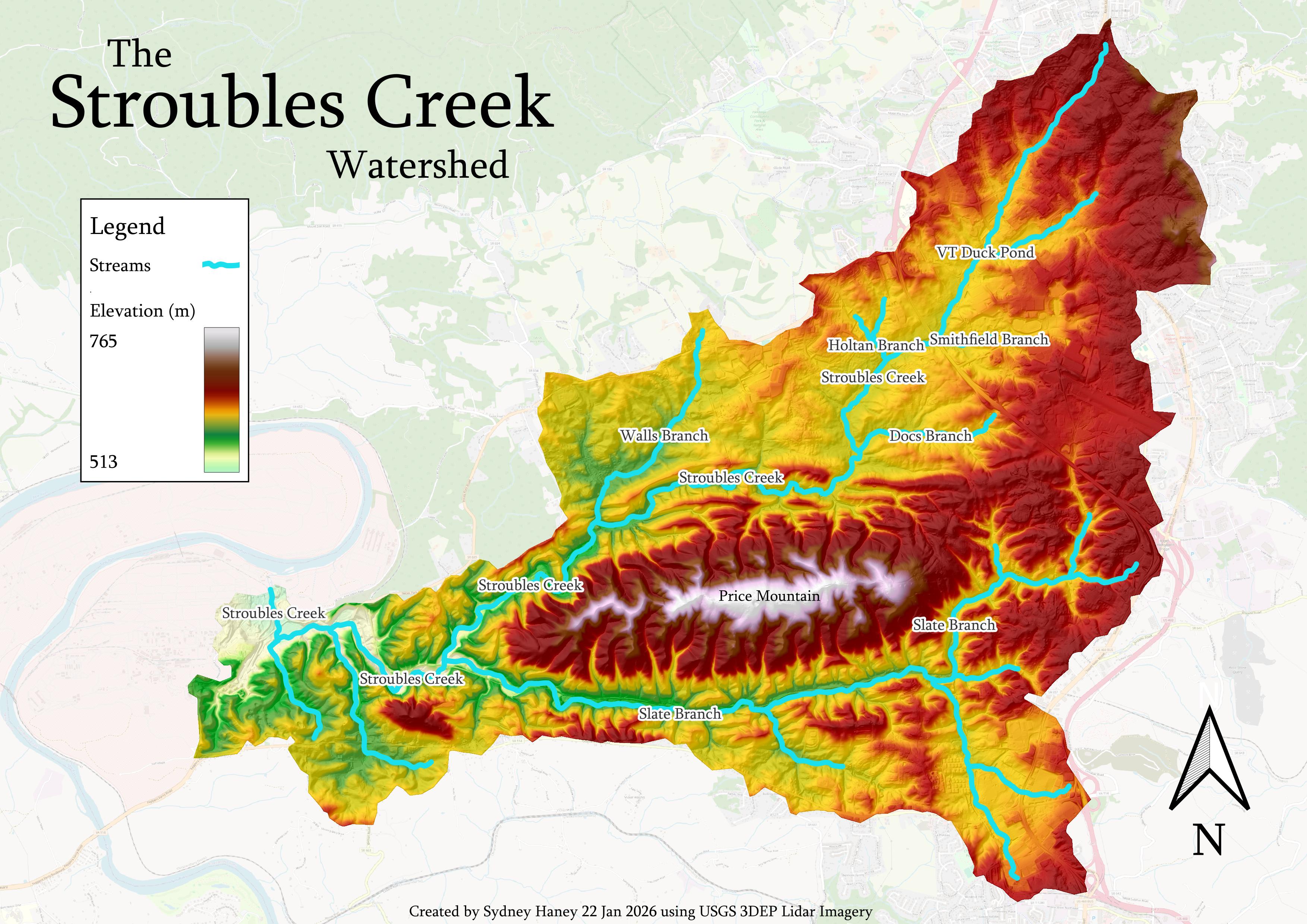
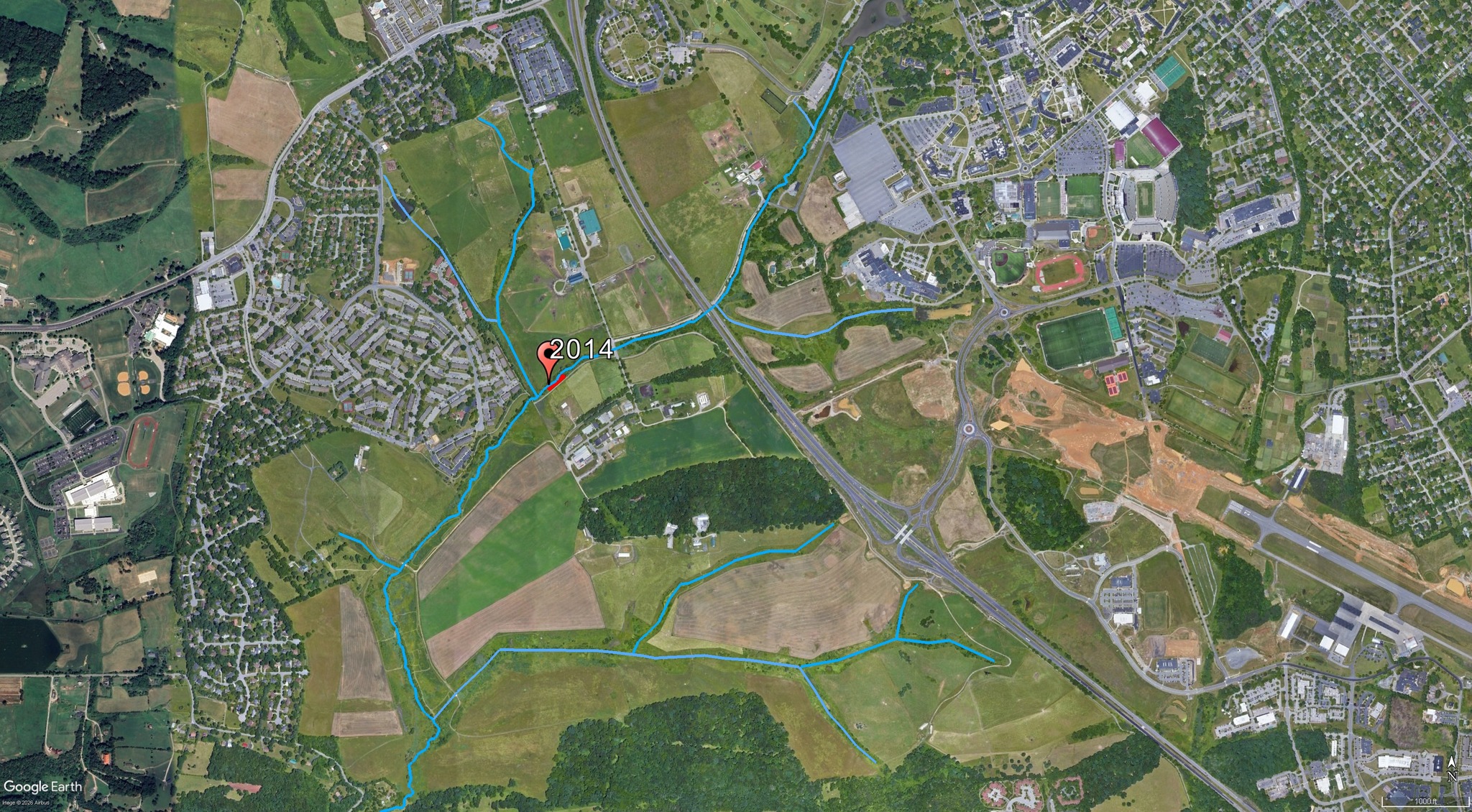
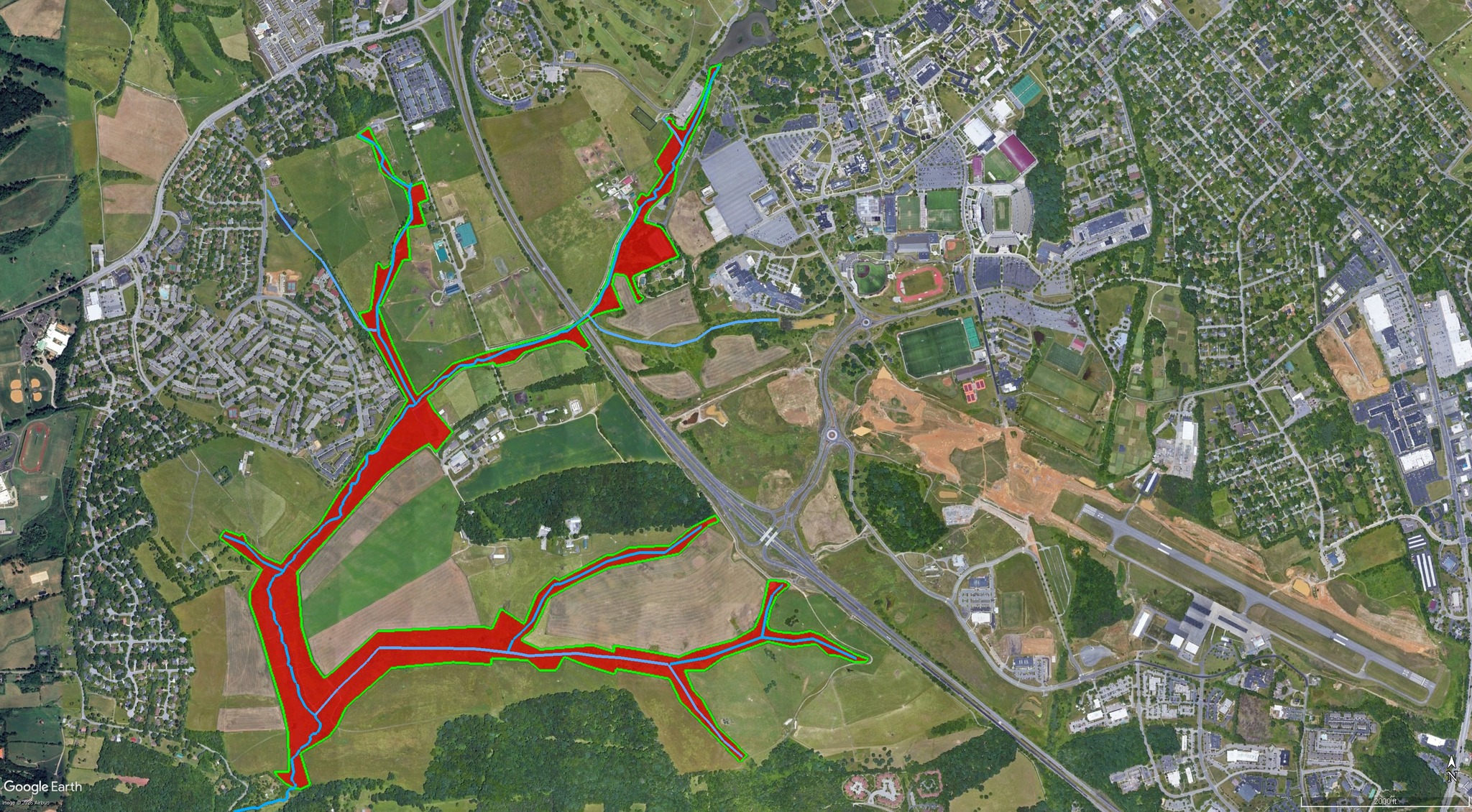
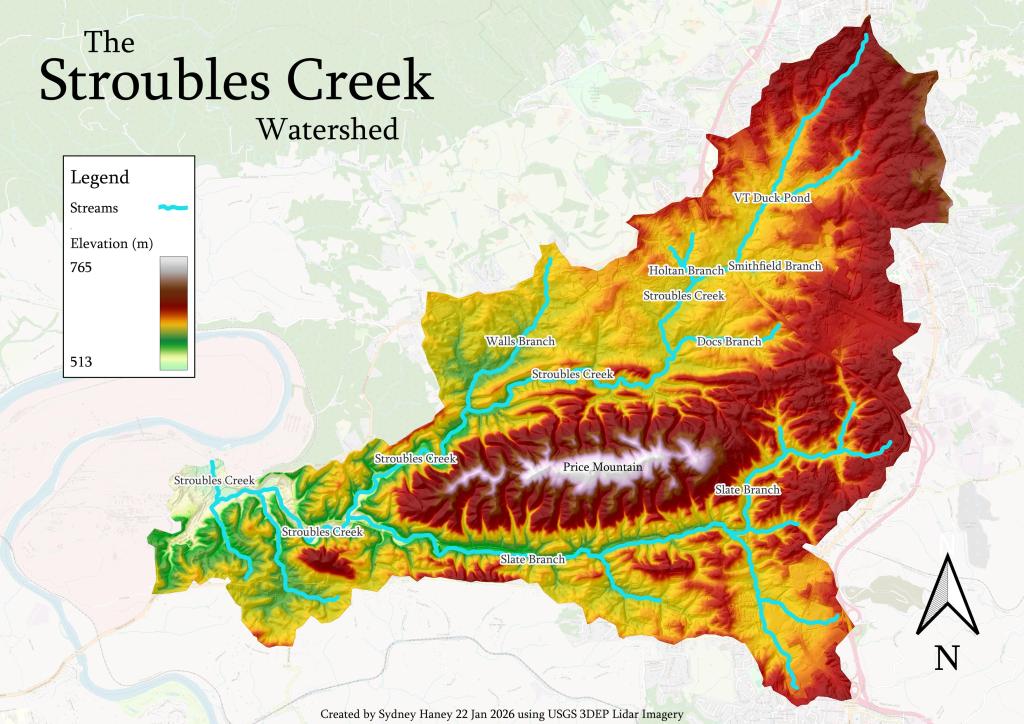
Stroubles Creek was designated as “federally impaired” in the late 1990s due to high levels of sedimentation and severely diminished benthic macroinvertebrate diversity. Downstream of Blacksburg and Virginia Tech, Stroubles faces a variety of stressors from urban, suburban, and rural land use. The main branch of Stroubles springs its headwaters in the heart of Blacksburg. Because of this, it winds beside roadways, picking up oils, trash, and anything else that washes off in rain events. It flows over and through channelizations before sinking underneath Virginia Tech’s drillfield for over half of a mile and resurfacing for about 500 feet before flowing into the Virginia Tech Duck Pond. Downstream, it flows through landscape of mixed uses including apartments, parking lots, horse, cattle, and sheep farms, as well as native and invasive riparian vegetation. It is in this stretch that our project begins: we prioritize restoring the riparian zone from former agricultural uses and invasive plant cover to high-productivity native vegetation. This shift to re-establish native forest helps to enhance water quality by providing shade, organic debris input, improving soil quality, and providing wildlife habitat. We also prioritize the importance of human stewardship and reciprocity; many of our native plants produce food edible and enjoyable to people and wildlife alike!
Since 2014, the Ecological Restoration Collaborative has undergone many iterations, different names, and accomplished a variety of projects. Formerly known as “Save Stroubles” and “Stroubles Creek Coalition,” ERC has taken on a broader name to encompass the variety of projects both in and outside of the Stroubles Creek Watershed. We have accomplished a great amount through community partnerships, passionate organizations and individuals, and continuously learning and improving.
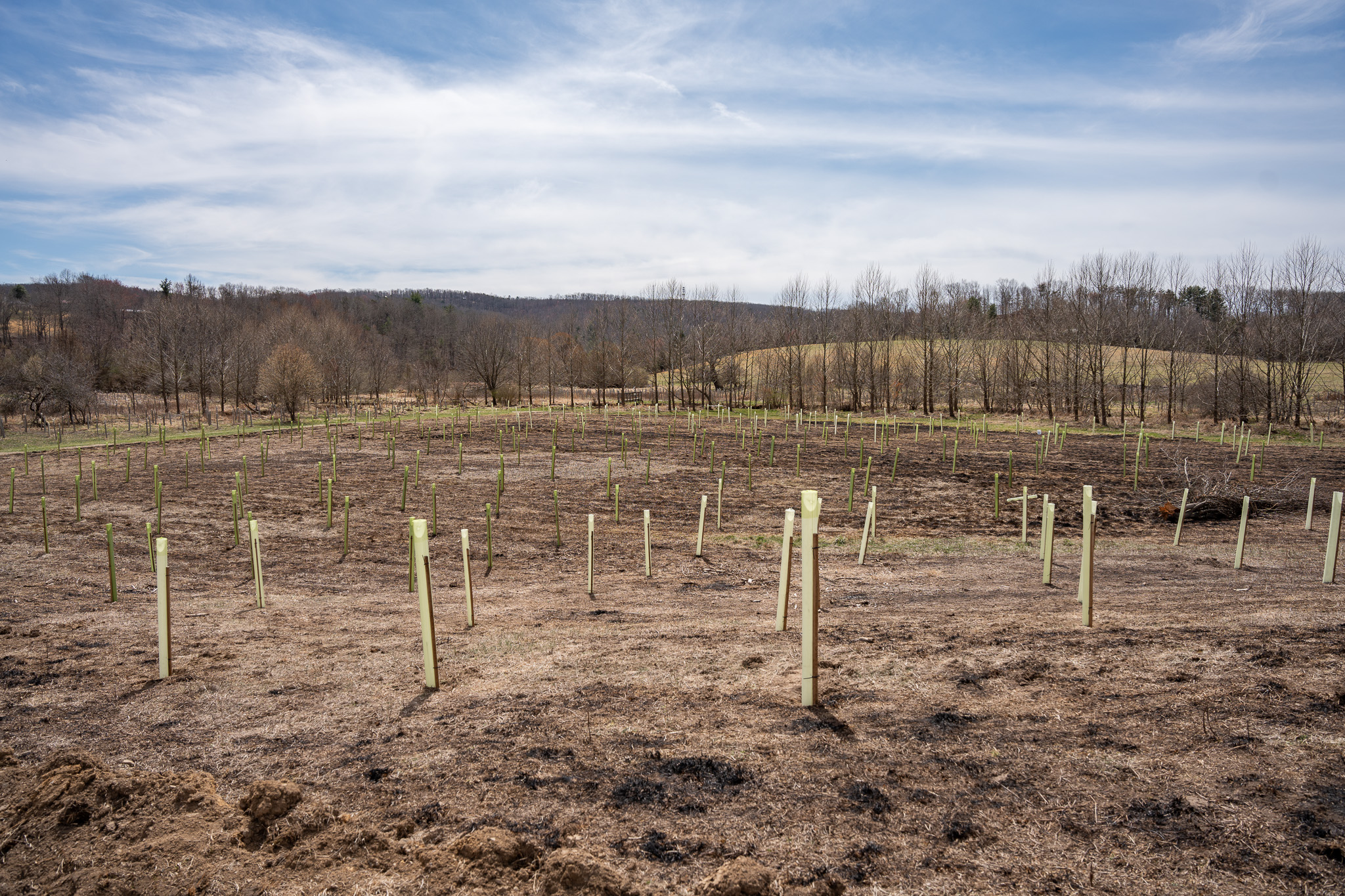
Beginning in 2014 with a half-acre riparian buffer planting, the Stroubles Creek project has grown to be our largest effort to date. The footprint now totals 80+ acres of native trees and shrubs planted at a density of 300+ trees per acre.
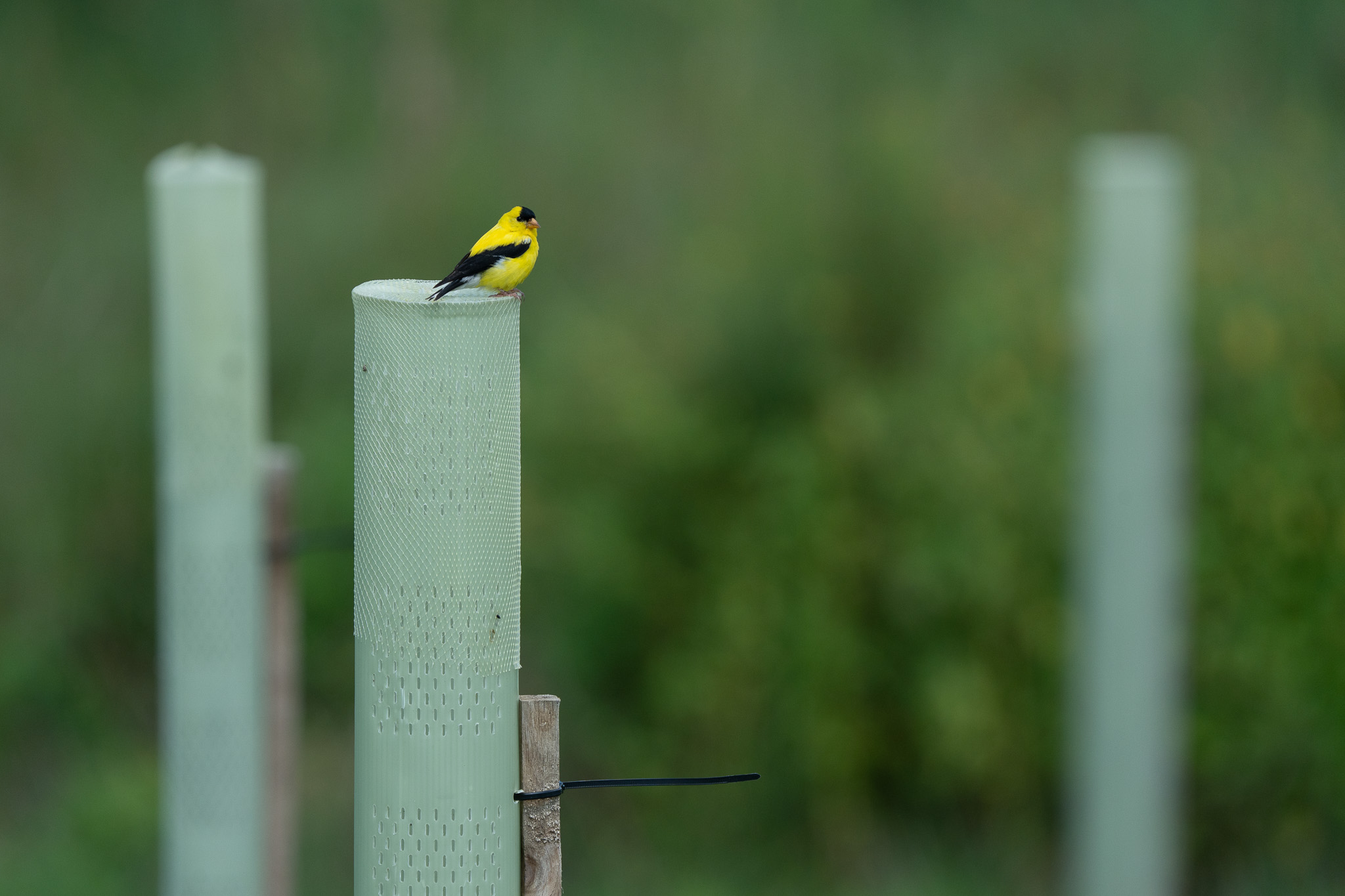
Since the Big Plant was established, volunteers have played a key role in reforestation and riparian buffer restoration, planting thousands of trees each spring since 2019. We also do our own planting and contract large-scale tree planting through various sources of grant funding each year.
In addition to planting trees, our efforts include:
- Monitoring survival and mortality of planted trees
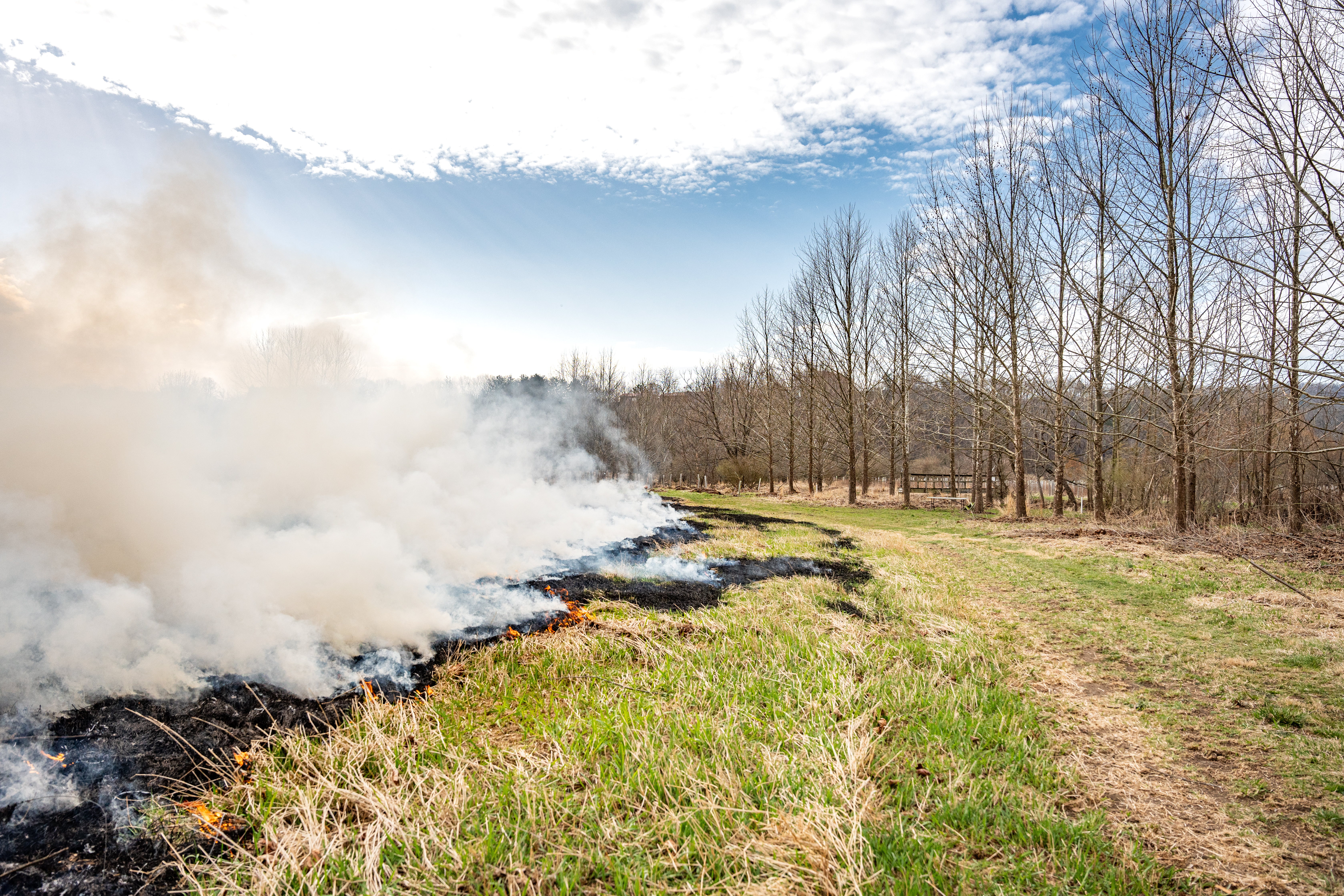
- Invasive species management (Autumn Olive, Chinese Privet, Tree-of-Heaven, Amur Honeysuckle, Multiflora Rose, Knapweed, Sawtooth Oak, etc.)
- Riparian buffer maintenance
- In-stream and floodplain connectivity restoration (building beaver dam analogs and more)
- Leading the Ecological Restoration Field Practicum for Virginia Tech students
- Wildlife monitoring
Partners include:
- The New River Conservancy
- Virginia Tech StREAM Lab
- Virginia Department of Forestry (VDOF)
- Environmental Coalition at Virginia Tech
- AmeriCorps National Civilian Community Corps (NCCC)
- Virginia Tech Office of Sustainability
- Stream Lab at Virginia Tech
- Virginia Department of Conservation and Recreation
- Virginia Tech Biological Systems Engineering
- Virginia Tech Urban Forestry
- Conservation Services Inc.
- VT Urban Horticulture Center
 Ecological Restoration Collaborative
Leave a comment